
MARINAS · HARBOURS · WATERFRONTS
Keep your water clean.
And prove the difference you're making.
Floating rubbish, plastics, oils and other pollution don't stop arriving when your team stops cleaning.
NETZERO Alchemists helps you continuously intercept floating surface pollution, reduce repeated manual clean-up and show what has been recovered.
The challenge
Pollution does not follow
your cleaning schedule.
Floating plastics, litter, oils and other pollution naturally collect around pontoons, corners, berths and areas of sheltered water.
Your team cleans it.
Then it comes back.
And somebody has to deal with it again.
There is a better way to keep on top of it.
The outcome
Keep it clean. Without sending your team out
to tackle the same problem again and again.
NETZERO Alchemists helps continuously intercept floating pollution where it naturally accumulates, keeping water cleaner between manual interventions and reducing the repetitive burden on your team.
Cleaner water
Continuous collection where floating pollution accumulates.
Less repetitive clean-up
Reduce the need to repeatedly send people out to deal with the same problem.
Continuous intervention
Pollution can be intercepted while your team gets on with running the marina or harbour.
Aquapod®
Continuous pollution interception
where you need it most.
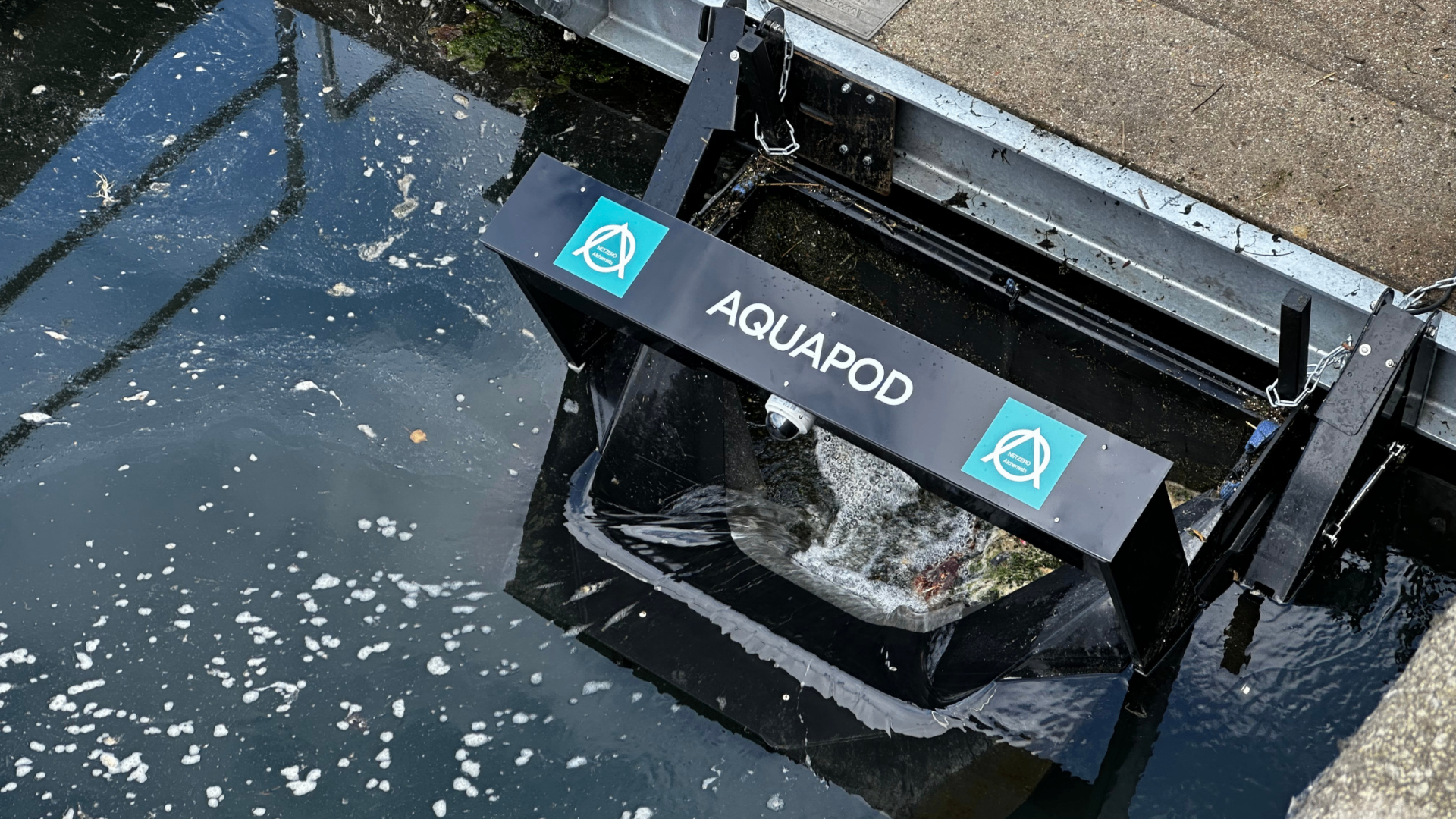
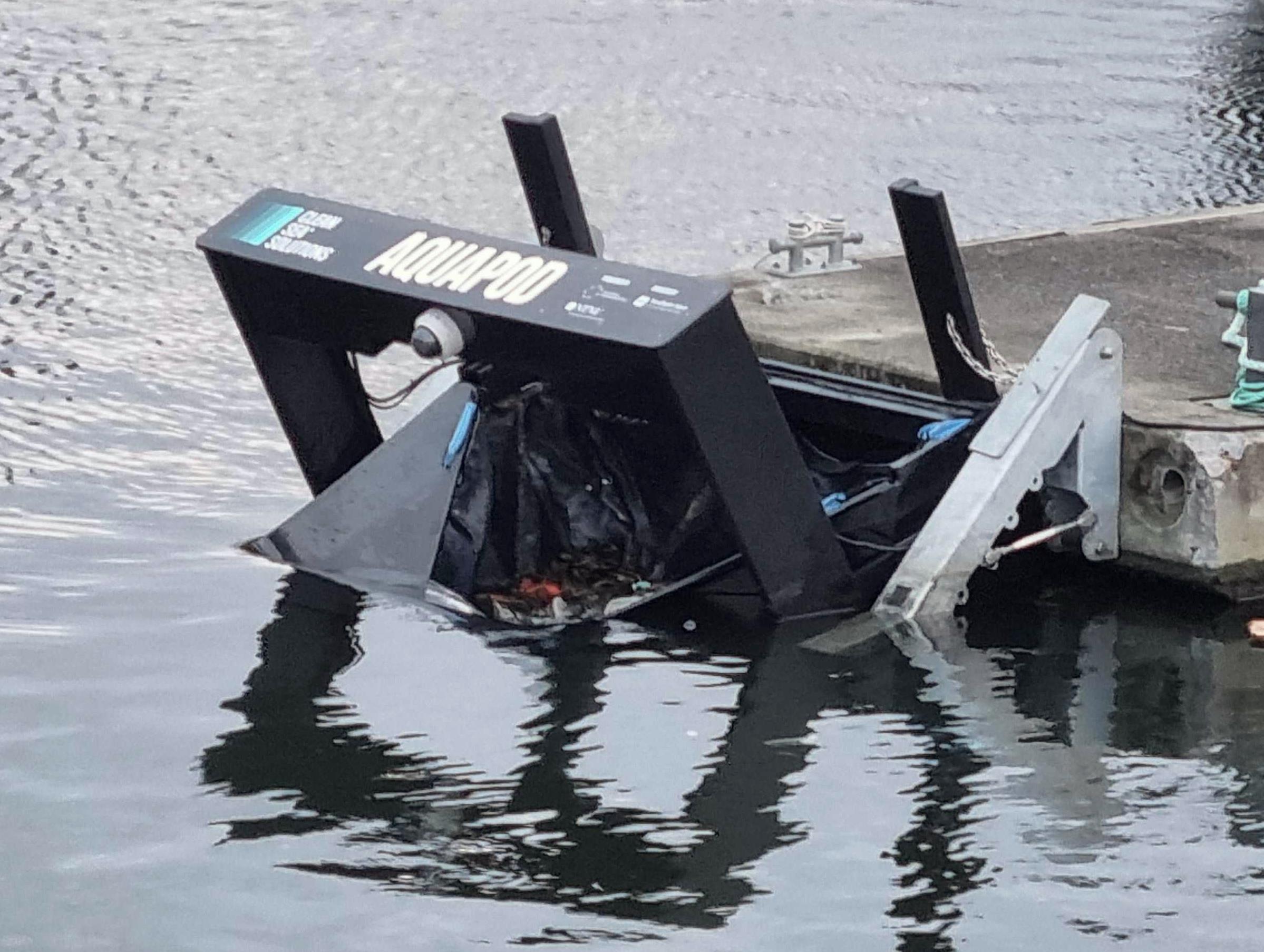
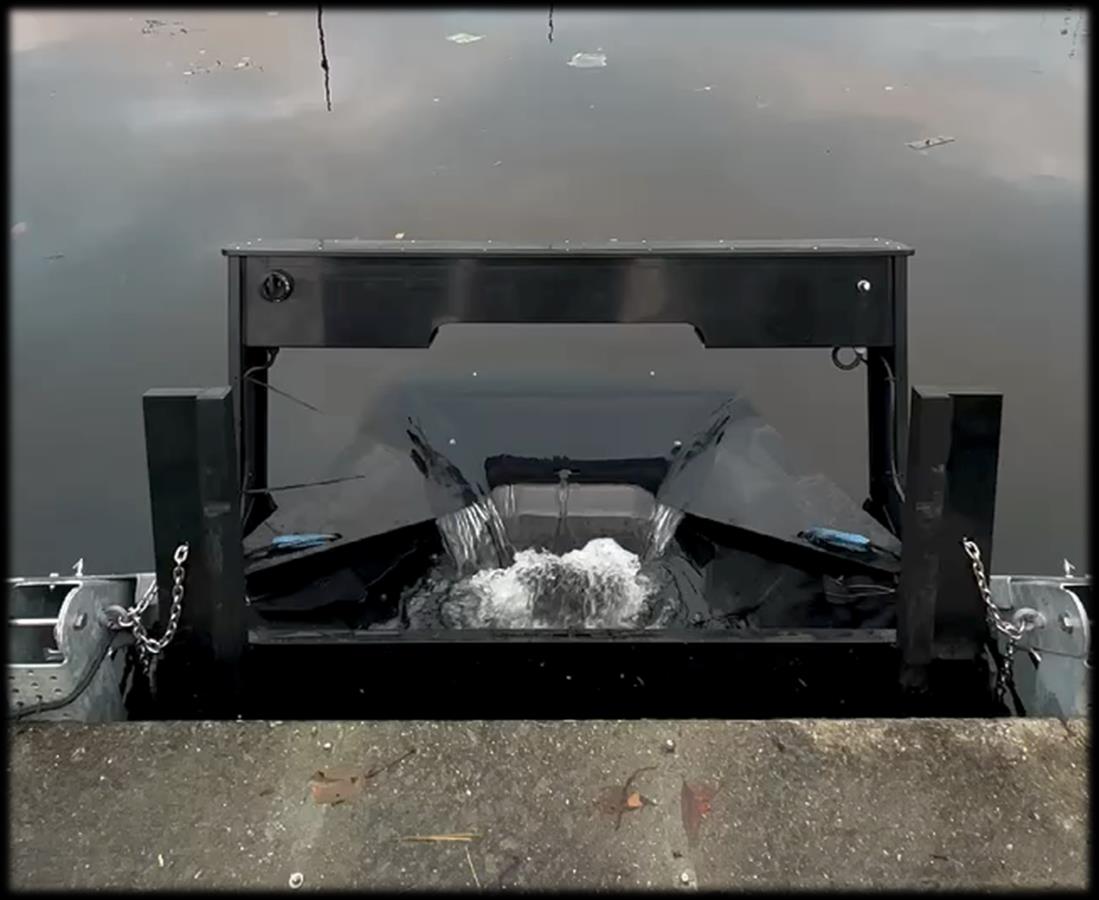
Aquapod is installed where floating pollution naturally accumulates. It continuously draws floating material from the surrounding water and captures it for removal, helping keep problem areas cleaner without relying entirely on repeated manual clean-up.
A controlled waterfall draws floating pollution into the basin, where a removable big-bag holds solid material and replaceable absorbents capture minor oil and diesel surface films. The unit balances like a seesaw, regulated by an internal pump.
- 24/7 or periodic collection
- Captures floating debris, macroplastics and microplastics of 1 mm or greater
- Can capture minor oil and diesel surface films using replaceable absorbents
- Designed for suitable jetty or pontoon infrastructure, subject to site assessment
- Cloud-connected and silent in operation
- Patented, award-winning innovation
- Over 350-litre collection capacity
“We collect smaller stuff with the Aquapod than we could do by hand.”
The Waterfall
Naturally attracts waste into Aquapod's basin.
Waste Collection
Removable big-bag for solid material. Minor oil and diesel surface films are captured using replaceable absorbents.
Balancing System
Aquapod balances like a seesaw; flow is pump-controlled.
In practice
Built for the people
who have to operate it.
A pollution solution only works if it also works for the people responsible for the harbour or marina. From installation and operation to emptying, maintenance and monitoring, our focus is making continuous pollution interception as straightforward as possible for the team using it.
- 01
Install
Fitted to suitable existing jetty or pontoon infrastructure at an identified accumulation point, following a site assessment.
- 02
Operate
The unit runs continuously or on a set pattern, drawing in floating material.
- 03
Empty
The big-bag is removed using the agreed lifting method. Used absorbents are replaced and handled through the approved local waste route.
- 04
Reset
The unit is returned to operation by the harbour or marina team.
- 05
Monitor
Activity is visible remotely through Clean Impact View.
What we agree before commissioning
Every installation needs a clear operating and waste journey before the Aquapod is commissioned.
- A named person or team responsible for operation
- A safe access and lifting method
- An agreed emptying and inspection frequency
- An authorised destination for recovered material
- A defined maintenance and service route
- An agreed ongoing operating budget
Aquapod is emptied, maintained and serviced by people. It is designed to reduce repetitive manual clean-up rather than remove the need for a team.
Belfast Harbour · Live deployment
Operating in a
live working harbour.
NETZERO Alchemists is already working in Belfast Harbour, where Aquapod has been deployed in a live harbour environment to continuously intercept floating pollution.
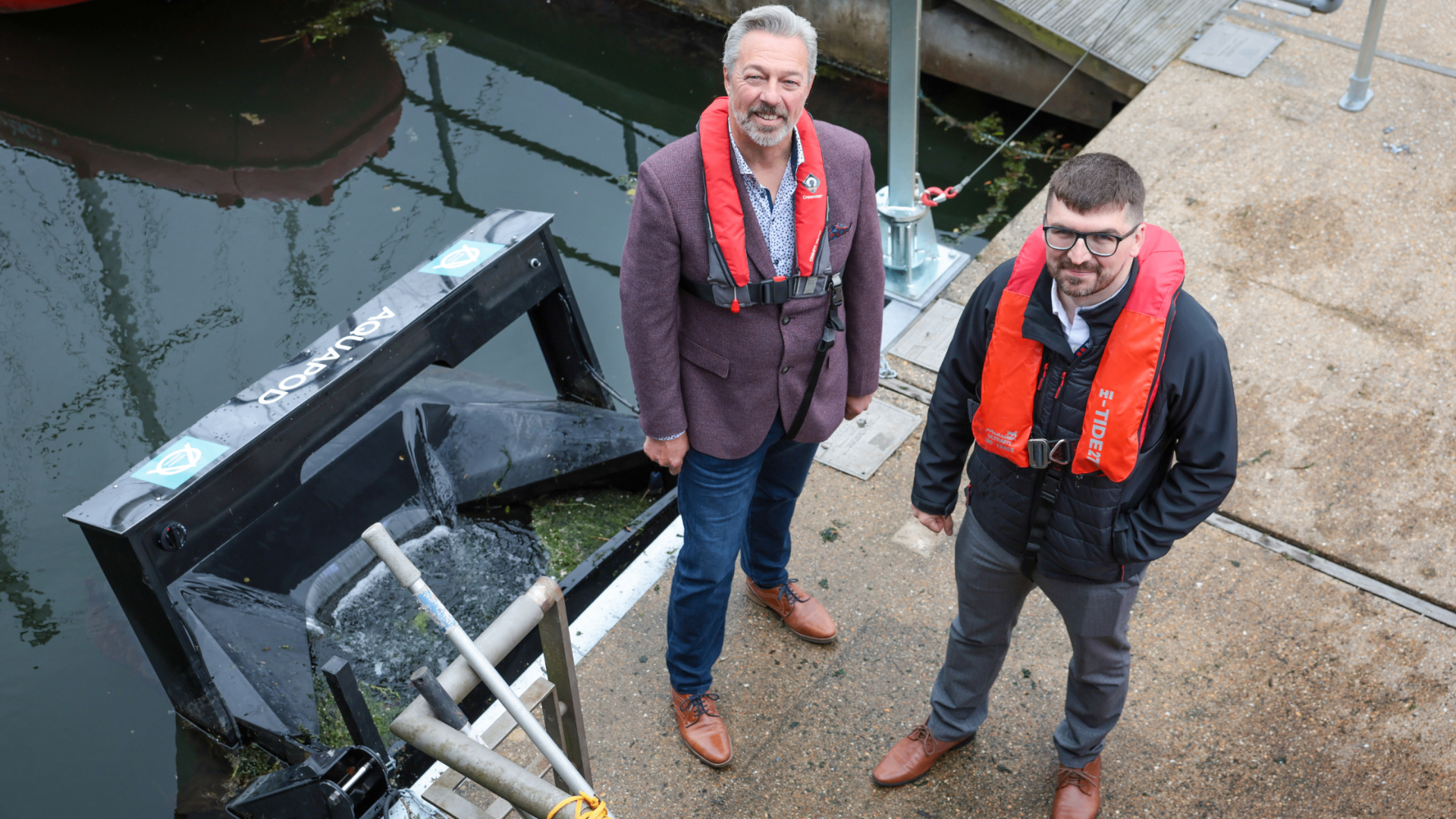
The River Lagan carries urban debris, plastics and surface pollution downstream toward the waterfront with tide, weather and river flow. It gathers in the sheltered water of the marina. Aquapod works continuously at the waterline there, intercepting floating plastics, debris, microplastics and oil film so that accumulation is dealt with as it arrives.
Paired with Clean Impact View, the deployment gives the harbour team a record of the environmental activity taking place, relevant to Belfast Harbour's Clean Tech ambitions, Green Harbour direction, Blueway development and long-term 2050 Master Plan.
“We hope Belfast Harbour can act as a benchmark for how practical innovation can support improving water quality and creating better environments.”
- Floating litter
- Macroplastics
- Microplastics of 1 mm or greater
- Organic debris
- Minor oil and diesel surface films
- Leaves and seaweed
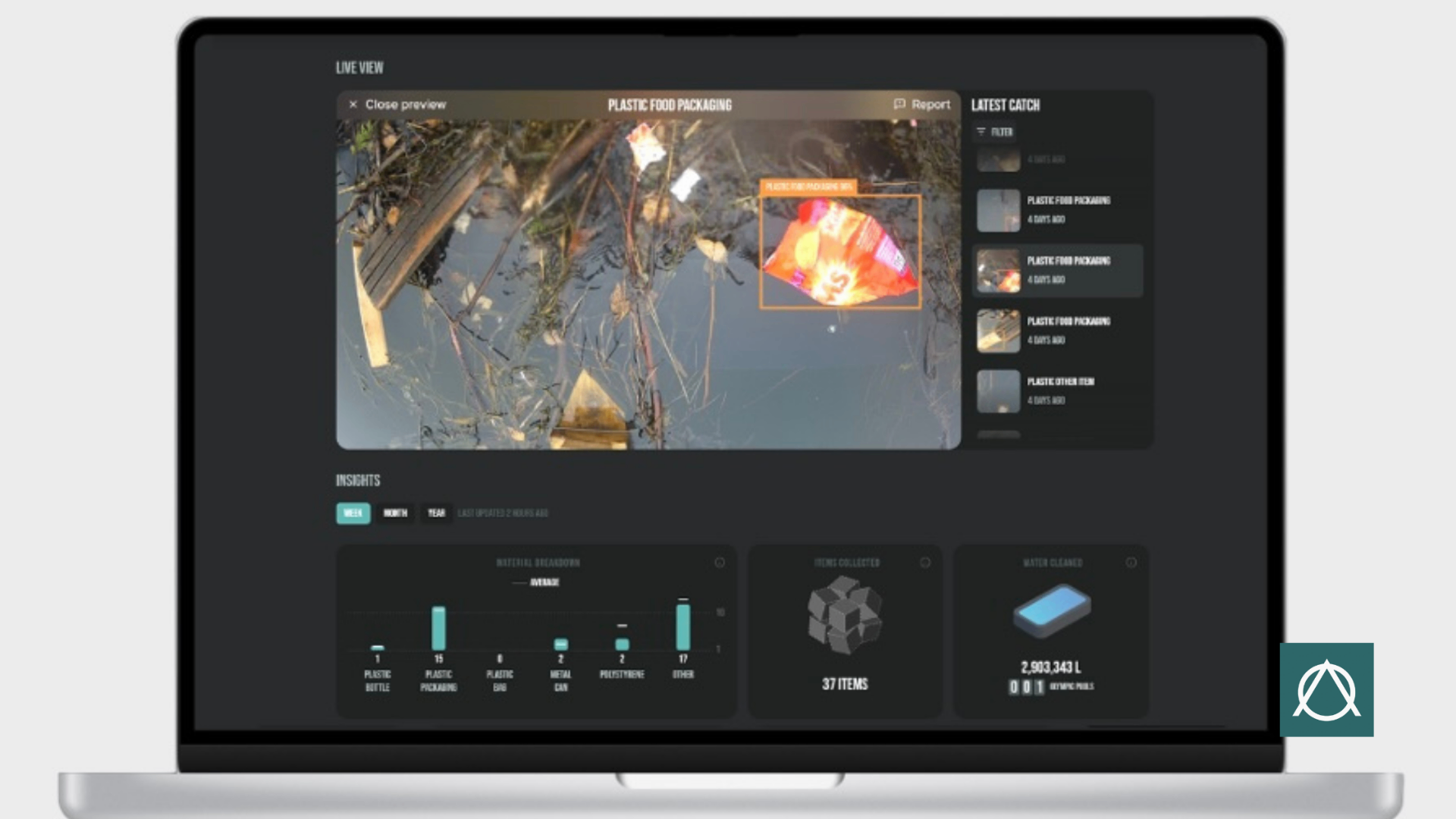
Clean Impact View
Don't just clean it.
Prove it.
Removing pollution matters. Being able to show what is happening and the action you're taking matters too. Clean Impact View helps turn environmental activity into evidence.
Remove it · Record it · Report it
Collected material is recorded and classified, estimated water volume drawn through the unit is tracked, and activity is timestamped. This helps marina and harbour teams understand what has been recovered and demonstrate the action being taken.
Clean Impact View provides operational evidence that can support environmental and pollution reporting. It does not by itself establish organisational compliance or prove wider ecological improvement.
Records can be exported to support relevant environmental and pollution reporting.
- Plastic food packaging1 day ago
- Polystyrene item1 day ago
- Polystyrene item1 day ago
- Plastic — other1 day ago
- Drinking bottle2 days ago
Records can be exported to support relevant environmental and pollution reporting.
BLUE FLAG MARINAS
Supporting the environmental work behind your Blue Flag.
A Blue Flag is maintained through consistent environmental action throughout the year.
Aquapod continuously intercepts floating pollution where it accumulates, while Clean Impact View records what has been removed and the action being taken.
Together, they help your team maintain visible environmental standards and provide useful evidence of the continuing work taking place within your marina.
Continuous interception · Recorded evidence
The NZA system
One problem.
A connected response.
Three parts of the same response, used together or on their own. Your water and your problem determine what is appropriate.
AQUAPOD
Intercept pollution where it accumulates.
Fixed continuous collection for problem areas within marinas, harbours and waterfronts.
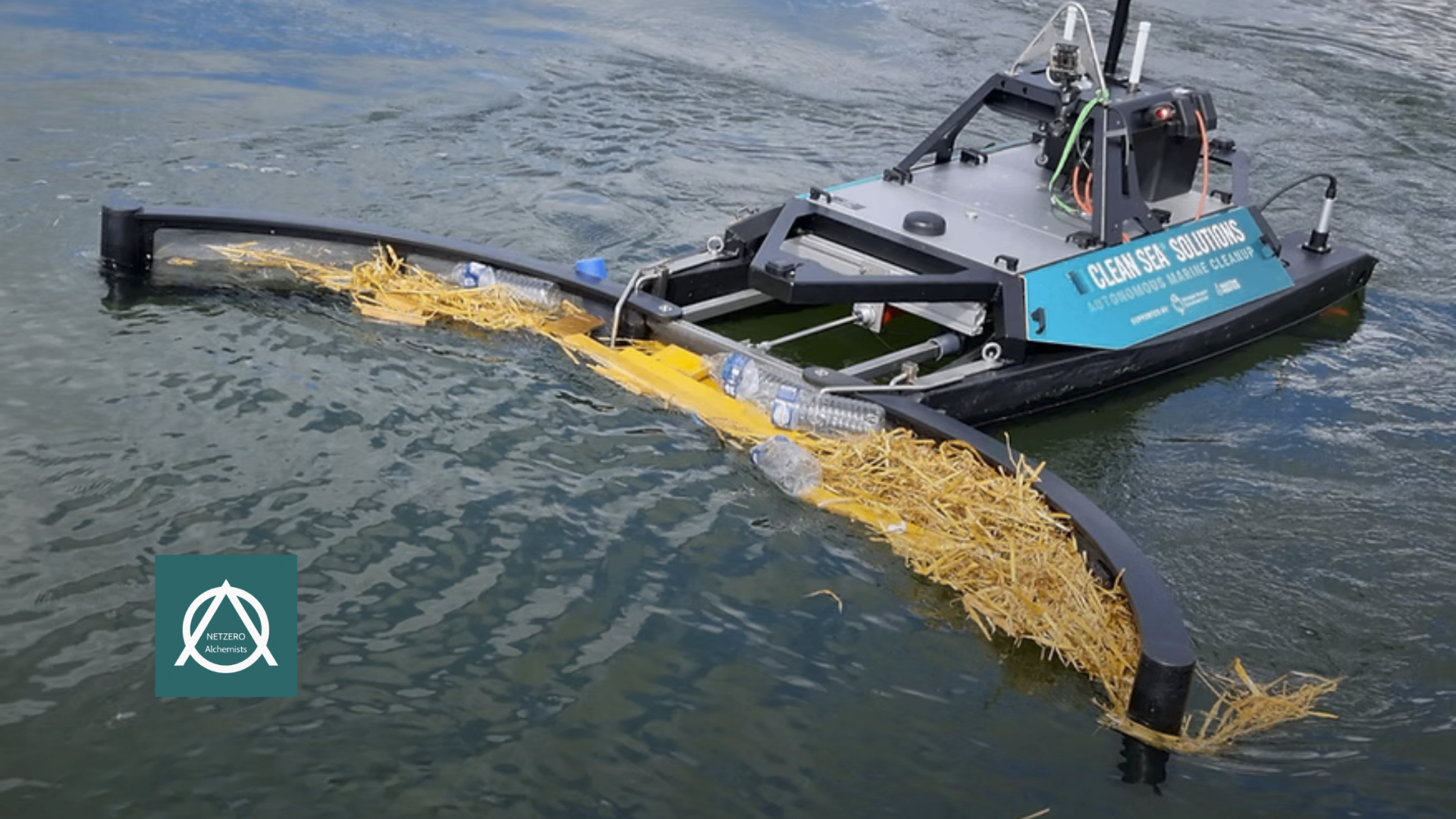
AQUADRONE
Reach pollution beyond fixed collection points.
Mobile capability for areas where a fixed installation cannot provide the whole response.
CLEAN IMPACT VIEW
Turn environmental activity into evidence.
Helps monitor, understand and demonstrate the work being done.
Does this sound familiar
When keeping on top of the water
becomes a problem.
Pollution keeps collecting in the same place
Floating waste repeatedly gathers around pontoons, berths, corners or sheltered areas.
Your team keeps having to clean it
The same manual intervention has to happen again and again.
An incident has created an ongoing recovery problem
Pollution needs to be intercepted rather than repeatedly chased after it disperses.
Environmental standards matter
You need practical action and evidence of what is being done.
People can see the problem
Visitors, customers, tenants, stakeholders and the wider public can see the condition of the water.
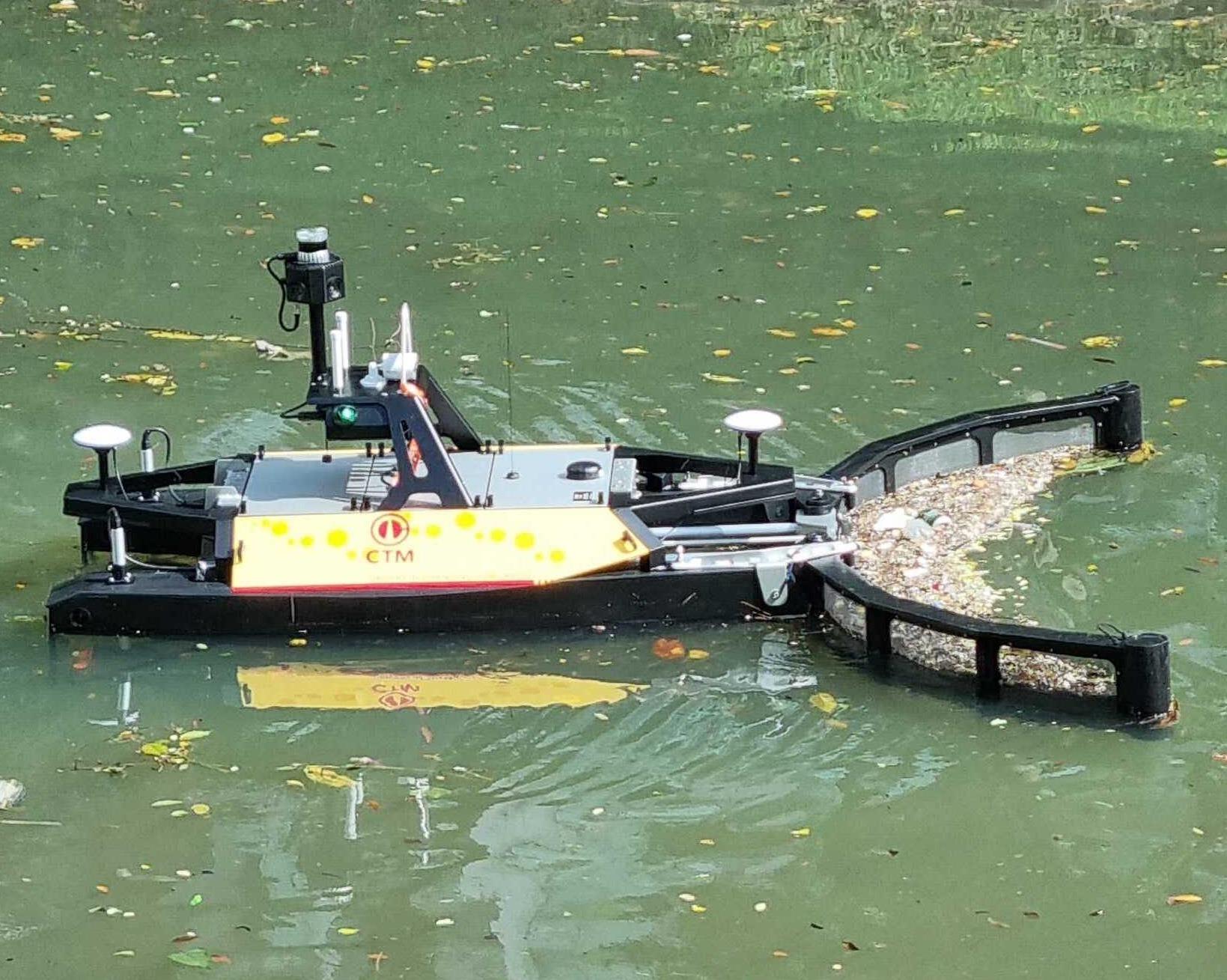
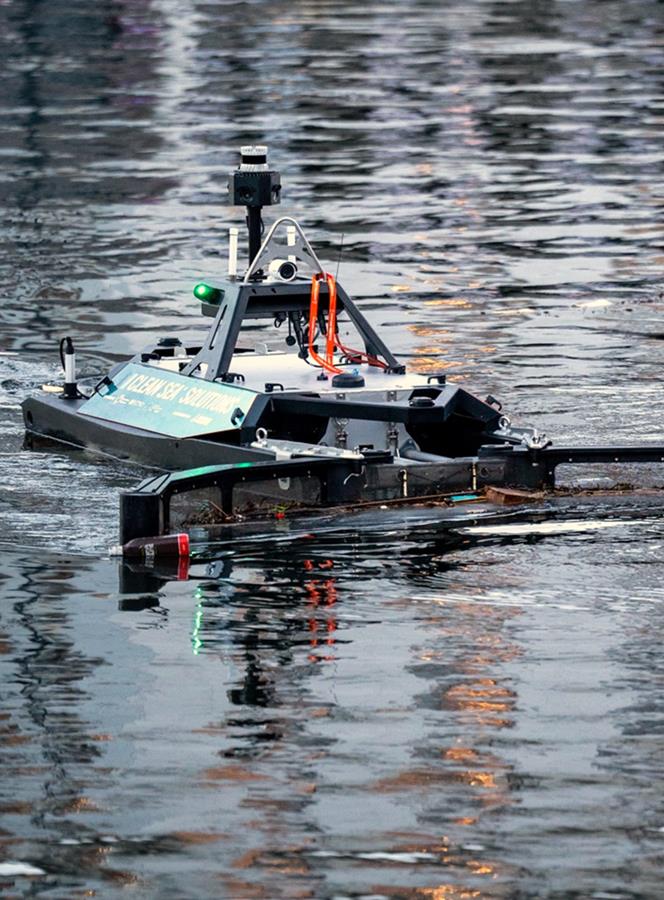
Aquadrone · Multi-purpose USV
Reach pollution beyond
fixed collection points.
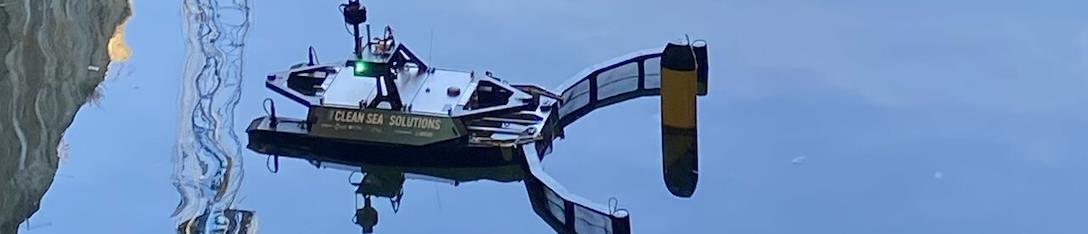
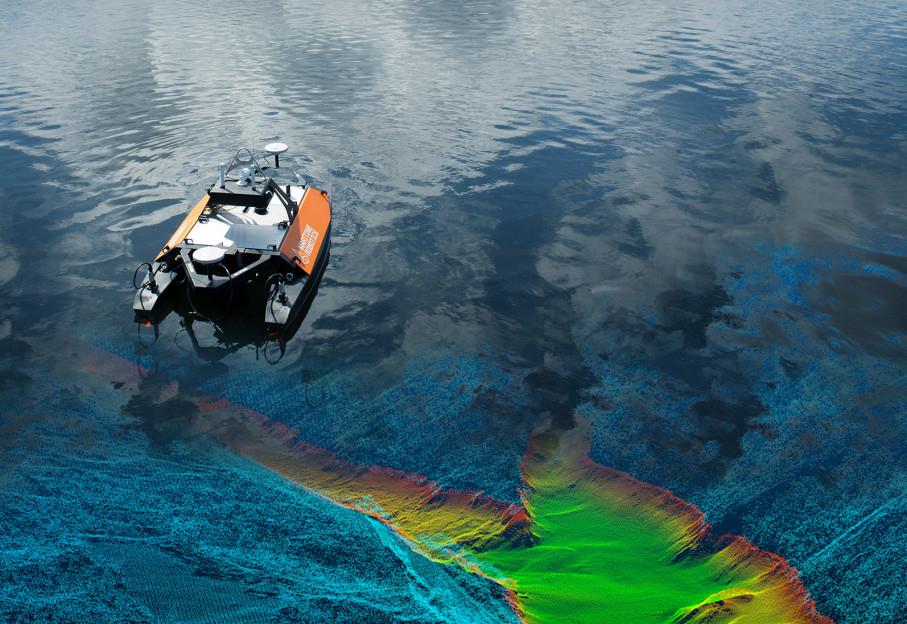
Some water cannot be covered by a fixed installation alone. Built in partnership with Maritime Robotics, Aquadrone adds mobile capability — sweeping the surface, transferring collected material to Aquapod, deploying booms and surveying the seabed from the same platform.
Explore Aquadrone→“We have a clear ambition to automate as many clean-up operations as possible.”
- 01
Autonomous surface sweeping
V-shaped collection boom, wide coverage, unmanned.
- 02
Waste transfer to Aquapod®
Closed-loop hand-off with the dockside collector.
- 03
Oil containment
Deploy and retrieve booms without a crewed vessel.
- 04
Sonar & seabed mapping
Bathymetric, hydrographic and geological surveys.
- 05
Security & surveillance
Threat detection and continuous perimeter data.
Field partners · Jan De Nul · Belfast Harbour · CTM Singapore · Maritime Robotics
Waterfront Autonomy
Technology that keeps working
when your team has other things to do.
Waterfront Autonomy is how we approach the problem: hardware, autonomy and software working together at the waterline so that keeping the water clean does not depend entirely on people being sent out again.
Autonomous operation
Collection continues at the waterline while the team is doing other work.
Engineering for working water
Built to sit within existing dock and pontoon infrastructure.
Remote monitoring
Cloud-connected units report activity without a site visit.
Sensors and software
Collected material is classified and recorded for reporting.
Northern Ireland and Norway
Engineering and field experience across both bases, with Maritime Robotics as partner.
Practical design
Silent operation, over 350L capacity, jetty-attachable, microplastic capture down to 1mm.
Recognised by
From the journal
People Trust
Clean Spaces.
An ongoing series on stewardship, standards, and the quiet discipline behind well-cared-for waterfronts.
Sure. Why not just wait until someone else cleans it up?
Leave floating rubbish long enough and the wind or tide will carry it somewhere else.
Nothing has actually been cleaned. The problem has simply moved.
The River Tyne nurdle disaster exposed that truth on an extraordinary scale. The release took moments. Recovery will continue as plastic moves through the river and coastal environment. If the pollution keeps arriving, why should the cleaning stop? The pollution may not be ours. What happens next is still a choice.
What arrives tomorrow?
Most Harbour Masters have a good idea what will be waiting for them in the morning. Then something happens that nobody could reasonably have planned for.
Harbours and marinas sit at the receiving end of much bigger systems.
They cannot control everything that arrives. They can become better prepared for what happens next. Continuous clean-up creates another layer of protection, working through the ordinary days between major incidents.
The tide never stops.
The water does not pause for weekends, inspections, or the end of a shift. It keeps moving, and with every movement it carries whatever has fallen into it.
The tide does not reset. Neither can the work that keeps water clean.
A marina, a harbour, a waterfront — these are living systems, not static scenes. The tide delivers, the current re-arranges, and the task of keeping the water clean begins again with every turn of the cycle. That is the case for continuous, autonomous collection: not to replace people, rather to stand watch when the team cannot.
The pressure of keeping your Blue Flag.
A Blue Flag is awarded in a single moment. It is defended every day of the season. Water quality, cleanliness, safety — all judged against standards that never relax.
The award is won once. The standard is kept daily.
For marinas and beaches, the hardest part is not the assessment — it is the quiet, continuous work between assessments. Autonomous collection and verified data turn that pressure into evidence you can hand over with confidence.
Environmental leadership begins where measurement ends.
The environmental sector has become exceptionally good at measuring problems. Water quality in real time. Pollutants to microscopic levels. Currents, tides, dashboards.
Data has never removed a single piece of plastic from the water.
Standing on the pontoon at Belfast Harbour, watching the Aquapod quietly pull water through its intake, the thought keeps returning — somebody still has to do the work.
Stewardship is leadership that continues long after the decision.
There comes a moment in every organisation when a choice has to be made. Wait for the problem to become visible — or quietly prevent it from becoming one.
There are no headlines when water remains clean.
Marina World reported this week on the installation of the United Kingdom's first marina Aquapod at Belfast Harbour. It would have been easy to tell a story about new technology. The more interesting story is about responsibility.
Next step
Talk to us about
your water.
If floating pollution keeps collecting in part of your marina, harbour or waterfront, show us what is happening. We can help you understand whether continuous interception could be appropriate.